Helpful Hygiene Tips for Patients Who Wear Braces

January 23rd, 2014

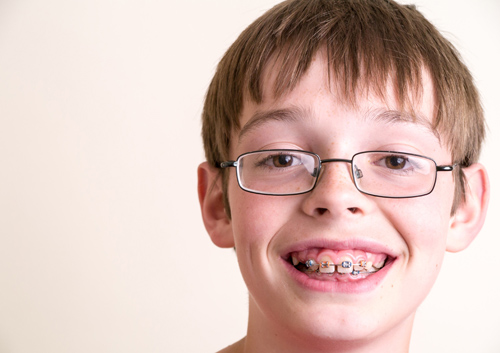
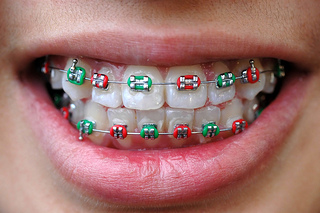
Today, Dr. Donald Wexler and our team thought we would offer a few tips for our patients currently undergoing orthodontic treatment. For those of you wearing braces, it’s important to be even more dedicated to good oral hygiene than those not currently in treatment.

After getting your braces, it is important to know how to take care of your teeth in order to ensure that your braces stay intact and do their job so that your teeth are in top-notch condition after you complete your orthodontic treatment.

Braces are known to trap food, which contributes to plaque formation. If it is not carefully removed from the teeth and gums, plaque will develop into decay or gum disease, leading to costly delays during your treatment. It is important to practice good oral hygiene by following instructions from Dr. Donald Wexler during your treatment.

We are proud to offer supplies to help fight plaque, such as a proxabrush, dental floss, and floss threaders. The use of an electric toothbrush and or a water pick can also be helpful in combating cavities and decay. And, of course, our team at Wexler Orthodontics suggests brushing at least twice a day.

We hope that helps! If you have any questions, please give us a call at our Spring Hill or Lecanto, FL office or ask us during your next adjustment appointment!

Orthodontic Emergency Care

January 16th, 2014

Although major orthodontic emergencies are relatively rare, when they do happen it is important to seek immediate attention. By comparison, a minor orthodontic issue is something you can usually take care of yourself, or wait until your next scheduled appointment for care. Here are some guidelines to help you understand the difference between an orthodontic emergency and a minor issue.

Orthodontic Emergencies

Acute, Direct Injury to the Mouth, Jaw, or Teeth

Whether undergoing orthodontic care or not, if you injure your mouth, jaw, or teeth, you should see a doctor or dentist immediately. You may need an X-ray to determine the extent of your injury. If the injury affects the orthodontic appliances, they will need adjustment or possibly replacement, depending upon the extent of the injury.

Infected Teeth

It is possible for teeth to become infected following orthodontic treatment. This may or may not be related to your orthodontic appliances. If you experience pain or swelling around a tooth that gets progressively worse, seek professional care as soon as possible.

Minor Orthodontic Issues

While true orthodontic emergencies are rare, minor issues are much more common. Here are some examples of minor orthodontic issues that can be remedied on your own and/or fixed at your next office visit:

  • Poking wire
  • Loose bracket
  • Loose elastic band
  • Loose wire
  • Loose appliance
  • Headgear does not fit
  • Lost or broken elastic band
  • General soreness

Any of the above issues can happen as a result of normal usage, shifting, and wear of your braces. Eating unusually hard or sticky foods can cause or exacerbate these problems. Vigorous brushing of the teeth can also be a factor. None of these issues are emergencies unless they are accompanied by acute or prolonged pain or discomfort.

As for on-the-spot remedies, covering a loose bracket or wire with wax can be a quick fix to alleviate discomfort until your next orthodontist visit. Poking or protruding wires can be moved with a cotton swab or tweezers, or clipped down with nail clippers. Be sure to sterilize the tweezers or clippers in alcohol first. Cover any clipped wire ends with a small ball of wax.

Some soreness or small abrasions in the mouth are normal, especially with recent orthodontic work. Rinse your mouth with a saltwater solution comprised of eight ounces or warm water and one teaspoon of salt.

When in doubt, be sure to contact our Spring Hill or Lecanto, FL office with any questions, or to schedule an appointment with Dr. Donald Wexler at Wexler Orthodontics.

What is a palatal expander?

January 9th, 2014

If Dr. Donald Wexler and our team at Wexler Orthodontics have recommended a palatal expander, you might be wondering what it is and how it will help you. A palatal expander is a small appliance fitted in your mouth to create a wider space in the upper jaw. It is often used when there is a problem with overcrowding of the teeth or when the upper and lower molars don’t fit together correctly. While it is most commonly used in children, some teens and adults may also need a palatal expander.

Reasons to get a palatal expander

There are several reasons you might need to get a palatal expander:

  • Insufficient room for permanent teeth currently erupting
  • Insufficient space for permanent teeth still developing which might need extraction in the future
  • A back crossbite with a narrow upper arch
  • A front crossbite with a narrow upper arch

How long will you need the palatal expander?

On average, patients have the palatal expander for four to seven months, although this is based on the individual and the amount of correction needed. Several months are needed to allow the bone to form and move to the desired width. It is not removable and must remain in the mouth for the entire time.

Does it prevent the necessity for braces?

The palatal expander doesn’t necessarily remove the need for braces in the future, but it can in some cases. Some people only need braces because of a crossbite or overcrowding of the teeth, which a palatal expander can help correct during childhood, when teeth are just beginning to erupt. However, others may eventually need braces if, once all their permanent teeth come in, they have grown in crookedly or with additional spaces between.

If you think your child could benefit from a palatal expander, or want to learn about your own orthodontic treatment options, please feel free to contact our Spring Hill or Lecanto, FL office!

Do I really need to wear my rubber bands with my braces?

January 2nd, 2014

Most of our patients at Wexler Orthodontics will need to wear rubber bands at some point during their orthodontic treatment. The main reason our patients are instructed to wear rubber bands is to correct their bite. If your teeth do not fit together properly, Dr. Donald Wexler will recommend that rubber bands be used. Dr. Donald Wexler may also recommend using rubber bands to close or open spaces.

Rubber bands are a critical part of your treatment, and wearing them as Dr. Donald Wexler and our team recommend will help move your teeth into the desired position. Dr. Donald Wexler may ask you to wear your rubber bands full time, meaning that they should only be taken out when you brush and floss your teeth three times a day. Other times, you may be asked to only wear them part-time, like only during the day or only during sleep.

If you still have any questions about orthodontic rubber bands, we invite you to give us a call or ask us during your next adjustment appointment. Remember, wearing rubber bands as prescribed by Dr. Donald Wexler is an important step during your treatment, and can reduce the time you have your braces. If you lose your rubber bands or run out, stop by our Spring Hill or Lecanto, FL office and pick up more!

Back to Top