
St. Patrick's Day

March 14th, 2013

On March 17, everyone has a little Irish in them. St. Patrick’s Day is a joyous celebration of Irish heritage. The holiday originated as a commemoration of Saint Patrick, who brought Christianity to Ireland. The saint arrived in Ireland in 432 and earned the reputation of a champion of Irish Christianity. March 17th, the day of St. Patrick’s death, has been commemorated by the Irish for over 1,000 years. St. Patrick’s Day is still observed as a religious feast day by several Christian denominations, but it is better known in the public imagination as a rich celebration of Irish culture.

St. Patrick’s Day has been an official public holiday in Ireland since 1903. Each year, the Irish celebrate with a several-day festival that includes theater performances, music, fireworks, and festive parades. The celebration is also a public holiday in Northern Ireland, Montserrat, and Newfoundland and Labrador. In other parts of the world with heavy Irish populations, it is an unofficial celebration of Irish heritage. Parts of Great Britain, Canada, Argentina, South Korea, Switzerland, New Zealand, the United States, and Australia commemorate the holiday each year. Typical celebrations in these countries include drinking green beer, wearing green, eating traditional Irish foods, parades, and shamrock decorations.

Many people, Irish and non-Irish alike, take part in the “wearing of the green” on St. Patrick’s Day. In fact, the color originally associated with Saint Patrick was blue. His use of shamrocks to explain the Holy Trinity to the Irish made the green clover emblematic of the holiday, leading to the traditional green attire worn by thousands on St. Patrick’s Day. Other little-known facts about St. Patrick’s Day include the following:

  • Each year, the United States and Ireland face off in a rugby competition called the “St. Patrick’s Day Test.”
  • Montreal celebrates the holiday with an annual parade, which has been held each year since 1824. The Montreal city flag even features a shamrock in its corner, as a nod to its Irish heritage.
  • The Guinness World Records named St. Patrick’s Day the “Friendliest Day of the Year.”
  • Along with Valentine’s Day, St. Patrick’s Day is one of the most widely celebrated saint’s day in the world.

No matter your cultural heritage, St. Patrick’s Day is a great time to let loose and celebrate your inner Irish-ness in the Spring Hill or Lecanto, FL area and beyond! Don your greenest attire and exclaim “Erin go Bragh!” (Ireland forever!) to everyone you meet. From Dr. Donald Wexler - have a great St. Paddy’s day!
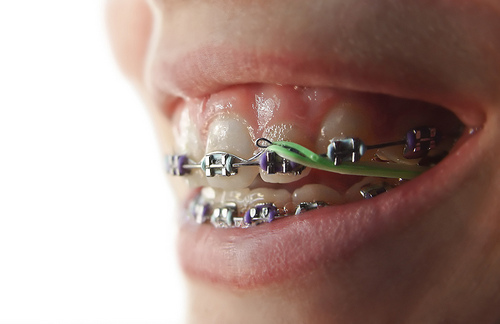

"Do I really need to wear my rubber bands with my braces?"

March 8th, 2013

Most of our patients at Wexler Orthodontics will need to wear rubber bands at some point during their orthodontic treatment. The main reason our patients are instructed to wear rubber bands is to correct their bite.  If your teeth are not fitting together properly, Dr. Donald Wexler will recommend that rubber bands be used. Dr. Donald Wexler may also recommend you using rubber bands if to close or open spaces.

Rubber bands are a critical part of your treatment, and wearing them as Dr. Donald Wexler and our team recommend will help move your teeth into the desired position. Dr. Donald Wexler may ask you to wear your rubber bands full time, meaning that they should only be taken out when you brush your teeth three times a day, and they should be replaced at this time to keep fresh ones working. Other times, you may be asked to only wear them part time, such as only during the day or only during sleep.

If you still have any questions about orthodontic rubber bands, we invite you to give us a call or ask us during your next adjustment appointment. Remember, wearing rubber bands as prescribed by Dr. Donald Wexler is an important step during your treatment, and can reduce the time you have your braces on. If you lose your rubber bands or run out, stop by Spring Hill or Lecanto, FL office and pick up more!

Adults and Braces - Not Just for Kids Anymore

March 1st, 2013

Just hearing the word “braces” can take many of us back to junior high — that painful era when we wore unattractive glasses, endured unflattering haircuts, and carried a mouthful of braces to complete the awkward adolescent look. Despite the common assumption that braces are for kids, more and more adults are choosing to pursue orthodontics to correct their smiles.

Braces for Adults

Perhaps you never had braces as a kid and you are embarrassed by your crooked teeth. Or you went through a round of braces a decade ago and stopped wearing your retainer, which allowed your teeth to shift. Whatever your personal history, wearing braces in adulthood is an excellent way to create the straight, beautiful smile you deserve.

What Are My Options?

With recent advances in orthodontic medicine, there are numerous options for adults who need braces. The basic option is traditional metal braces. These are best for individuals who have severely crooked teeth or a significant bite problem, or require other major orthodontic changes. Metal braces are typically the least expensive option. The greatest drawback to wearing metal braces as an adult is aesthetics. Many people find them unattractive and distracting.

If you are a professional who is worried about your personal appearance, clear ceramic braces may be a better choice. Clear braces are capable of handling very crooked teeth or bite issues, but they cost more than metal braces. You also have to be careful about smoking or drinking red wine, soda, and other dark beverages while wearing clear braces. These items may stain the adhesive that binds the brackets to your teeth.

Another popular option for adults who need braces is a clear aligner treatment, such as Invisalign®. This system works in a different way from traditional braces by applying a series of clear, retainer-like aligners. The series is custom made for your teeth, which makes this option more expensive than either metal or ceramic braces. In general, the Invisalign process takes anywhere from three to 18 months to complete. You should be aware that Invisalign is not as effective as traditional braces in treating bite problems, teeth that are lower or higher than others, or severely overcrowded teeth.

Although you may be nervous about the prospect of getting braces as an adult, you should not let your fears stop you from talking with Dr. Donald Wexler. A consultation with at our Spring Hill or Lecanto, FL office will address your concerns and provide information about the best course of treatment for you. No matter what your personal situation, adult braces can be a great way to boost your confidence and create the smile you’ve always dreamed of.

What Exactly is a Root Canal?

February 22nd, 2013

Hearing that you need a root canal can be highly intimidating. What is a root canal? It is the removal of the nerve supply from the tooth. Here, Dr. Donald Wexler will describe the parts of a tooth and explain the reasons for a root canal and how it is done when you visit us in Spring Hill or Lecanto, FL.

Your tooth is made up of many layers. The outside layer is called enamel and is made of minerals. The middle layer is dentin, which is also a calcified tissue, but less dense. The center of the tooth is called the pulp, and that hosts the nerves and blood vessels. A root canal is the removal and replacement of this center with a sterile filling.

A root canal is needed when an infection spreads to the center of the tooth. This can be from trauma (recent or previous), a cavity, a severe crack, or other compromise that causes nerve damage. An X-ray and examination are required to see if a root canal is needed. Symptoms may include but are not limited to pain, swelling, change in tooth color, and over-reaction to temperature change or pressure.

When it is time to begin, you’ll receive local anesthesia (via injection) to make you most comfortable. A rubber dam is used to isolate the tooth, while other equipment determines the nerve location and maintains a sterile working environment. All of the infected area is removed including the nerve tissue and blood vessels. Then, medicines are used to sterilize and alleviate any pain. Next is the placement of a filling material in the spot where the nerve used to be.

When your nerve and blood supply are taken away, the tooth is non-vital, or dead, and can become weak and fragile. If your tooth is badly decayed, a large portion of it will have to be removed. It is recommended to place a crown on the tooth to keep the enamel from breaking or falling apart. If you do not get a crown, you could eventually lose the tooth to more decay or infection. The tooth could also break off completely and you would have to have an extraction. The crown fits over the top of the tooth and secures it from breaking down.

A root canal saves the life of a tooth that would otherwise succumb to further infection and eventually extraction. Infection is the cause of most-needed root canals. If you are ever unsure what is happening at your appointment, don’t be afraid to ask questions so you understand the procedure completely.

Back to Top